Erectile dysfunction is often thought of as a single medical condition, but in reality it is a symptom rather than a disease itself. An erection depends on the precise coordination of the nervous system, blood vessels, hormones, smooth muscle, and psychological factors. When any part of this complex process is disrupted, achieving or maintaining an erection may become difficult.
Understanding how a normal erection occurs helps explain why erectile dysfunction can develop—and why different patients often require different treatment approaches.
How Does a Normal Erection Work?
A healthy erection is the result of a highly coordinated biological process that begins in the brain.
Sexual stimulation—whether physical touch, visual stimulation, emotional intimacy, or sexual thoughts—activates nerve signals from the brain and spinal cord. These signals trigger the release of nitric oxide (NO) within the penile tissues.
Nitric oxide is a key signaling molecule that relaxes the smooth muscle surrounding the penile arteries and the erectile tissue known as the corpora cavernosa. As these muscles relax, blood vessels widen, allowing a rapid increase in blood flow into the penis.
As the corpora cavernosa fill with blood, the expanding tissue compresses the veins responsible for draining blood away. This natural “veno-occlusive mechanism” traps blood inside the penis, creating a firm and sustained erection suitable for sexual activity.
After ejaculation or when sexual stimulation ends, nitric oxide production decreases, smooth muscle contracts, blood flows out through the veins, and the penis gradually returns to its flaccid state.
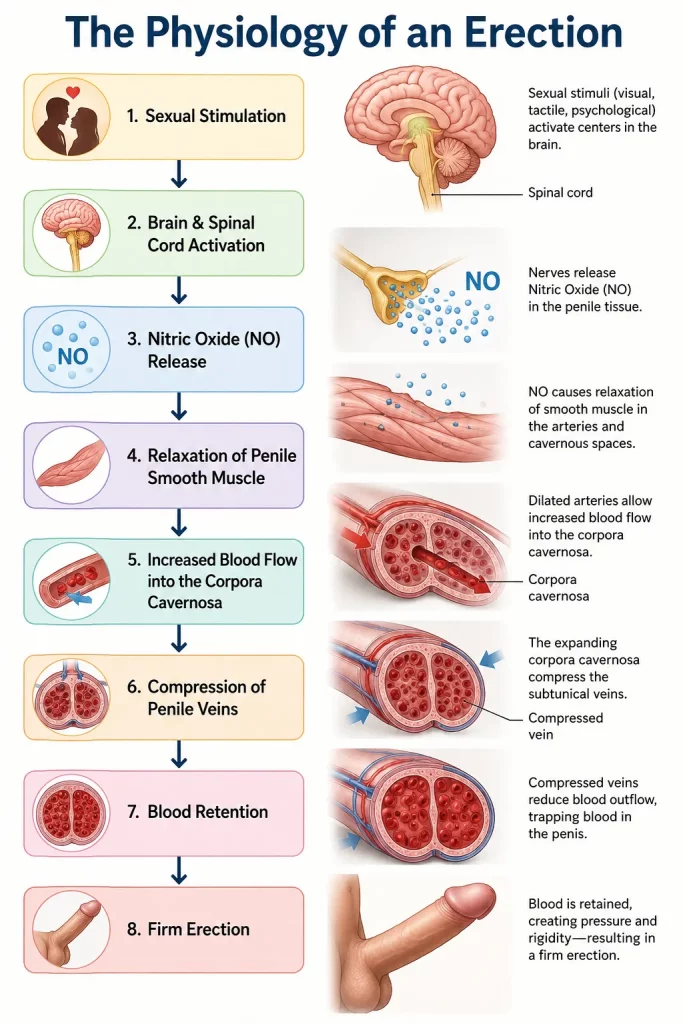
The Physiology of an Erection
What Happens in Erectile Dysfunction?
Erectile dysfunction occurs when one or more steps in this process fail.
For some men, nerve signals may not be transmitted effectively. Others may experience reduced nitric oxide production, narrowed blood vessels, impaired circulation, hormonal imbalances, or structural changes within the penile tissue.
Over time, chronic diseases such as diabetes and cardiovascular disease can damage both blood vessels and nerves, making erections increasingly difficult.
Instead of filling completely with blood, the erectile tissue receives inadequate circulation. Without sufficient blood pressure inside the corpora cavernosa, the veins cannot be compressed effectively, allowing blood to escape before a firm erection can be maintained.
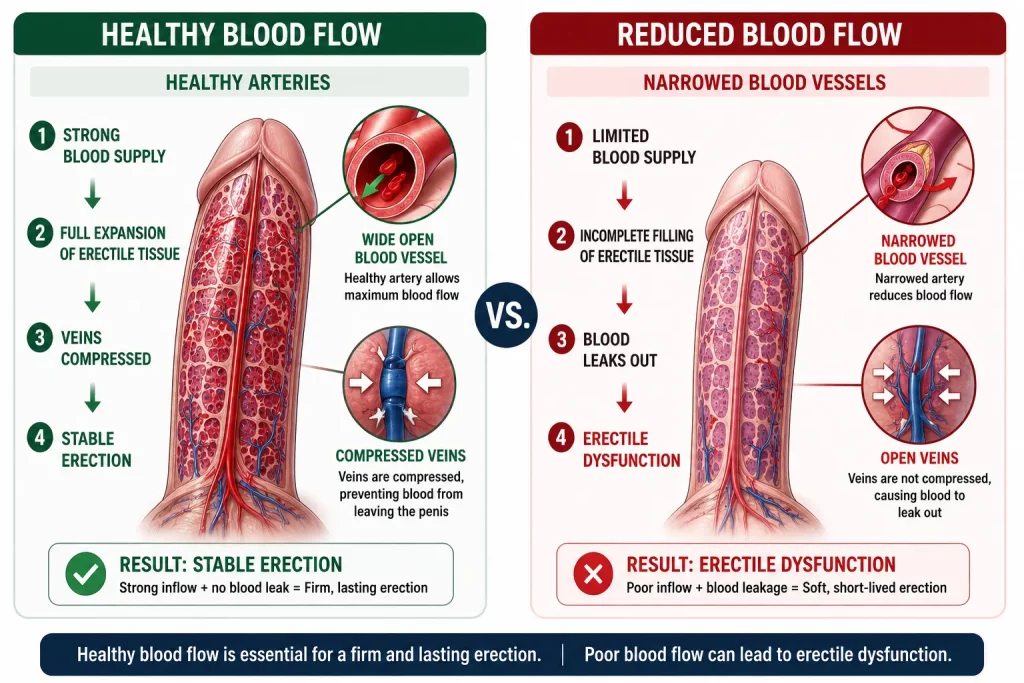
The Four Main Systems Required for a Healthy Erection
Although erectile dysfunction may appear to have a single cause, most cases involve interactions between several body systems.
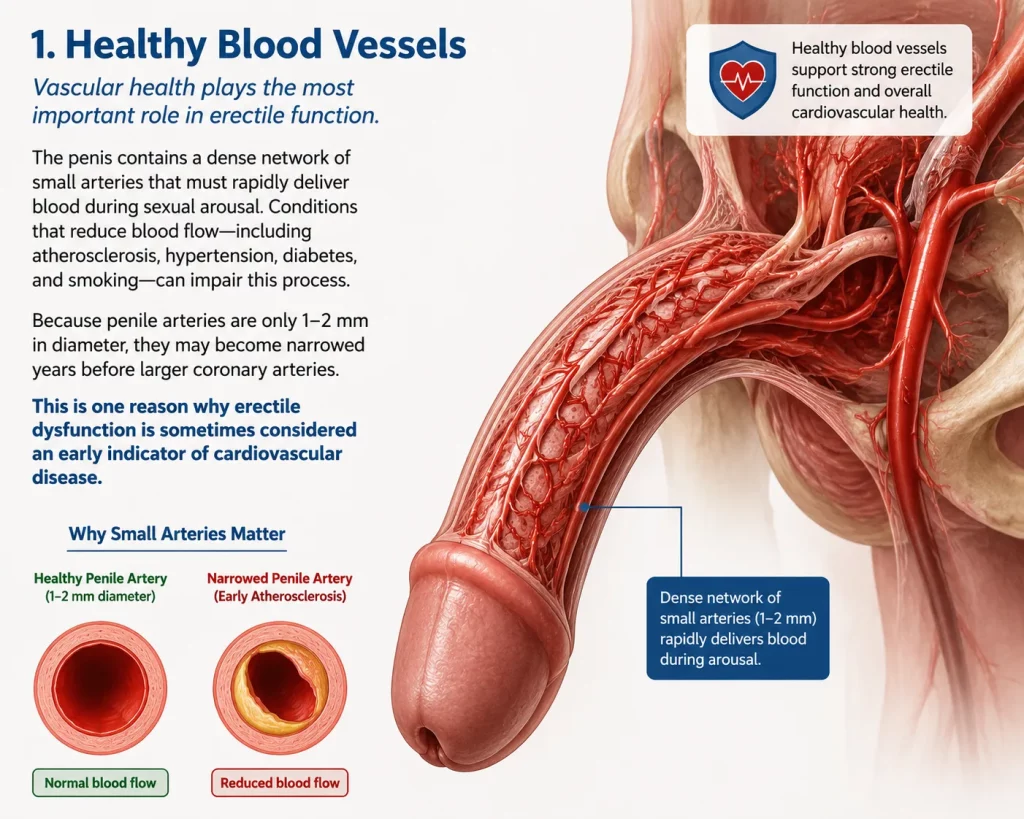
1. Healthy Blood Vessels
Vascular health plays the most important role in erectile function.
The penis contains a dense network of small arteries that must rapidly deliver blood during sexual arousal. Conditions that reduce blood flow—including atherosclerosis, hypertension, diabetes, and smoking—can impair this process.
Because penile arteries are only 1–2 mm in diameter, they may become narrowed years before larger coronary arteries. This is one reason why erectile dysfunction is sometimes considered an early indicator of cardiovascular disease.
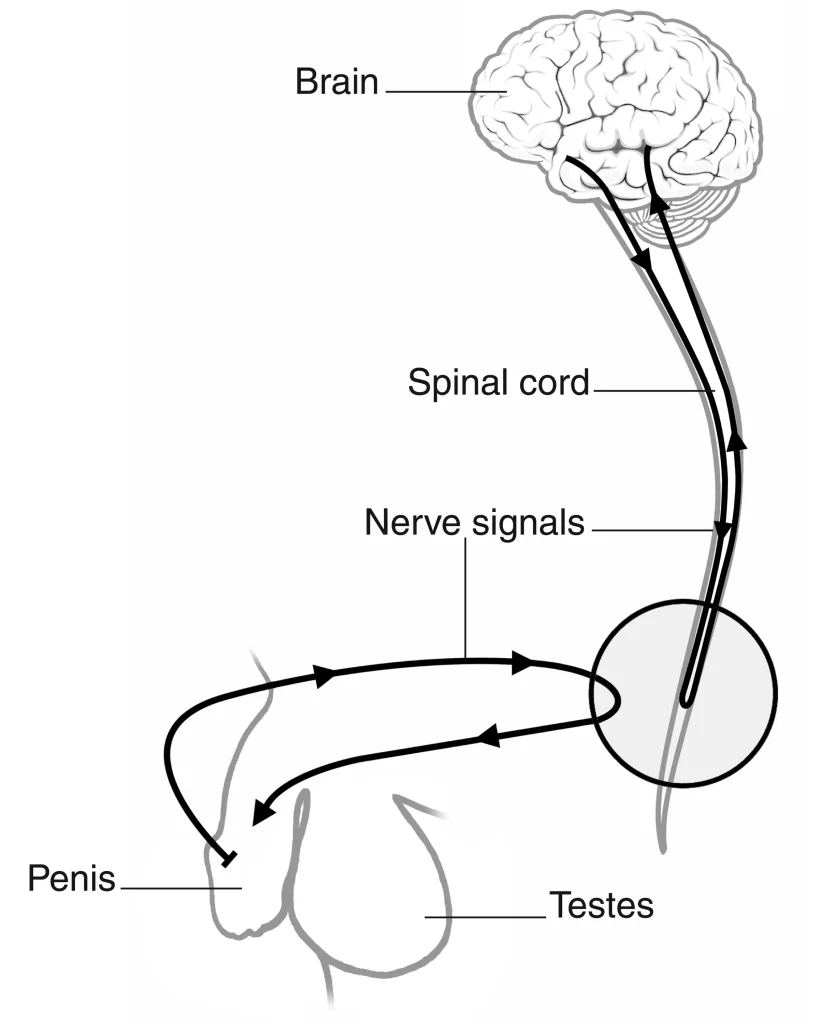
2. Healthy Nerves
Communication between the brain and the penis depends on an intact nervous system.
Nerve signals initiate nitric oxide release and coordinate the vascular changes required for erection.
Neurological conditions that may contribute to ED include:
- Diabetes-related neuropathy
- Spinal cord injury
- Multiple sclerosis
- Parkinson’s disease
- Pelvic surgery, including radical prostatectomy
- Chronic nerve compression
Damage to these nerves may interrupt communication even when blood vessels remain healthy.
3. Balanced Hormones
Hormones influence sexual desire, erectile function, and reproductive health.
Testosterone plays a central role in maintaining libido and supporting normal erectile physiology. Low testosterone levels may reduce sexual interest and contribute to erectile difficulties, although testosterone deficiency is not the cause of most cases of ED.
Other endocrine disorders—including thyroid disease, elevated prolactin levels, and poorly controlled diabetes—may also interfere with normal sexual function.

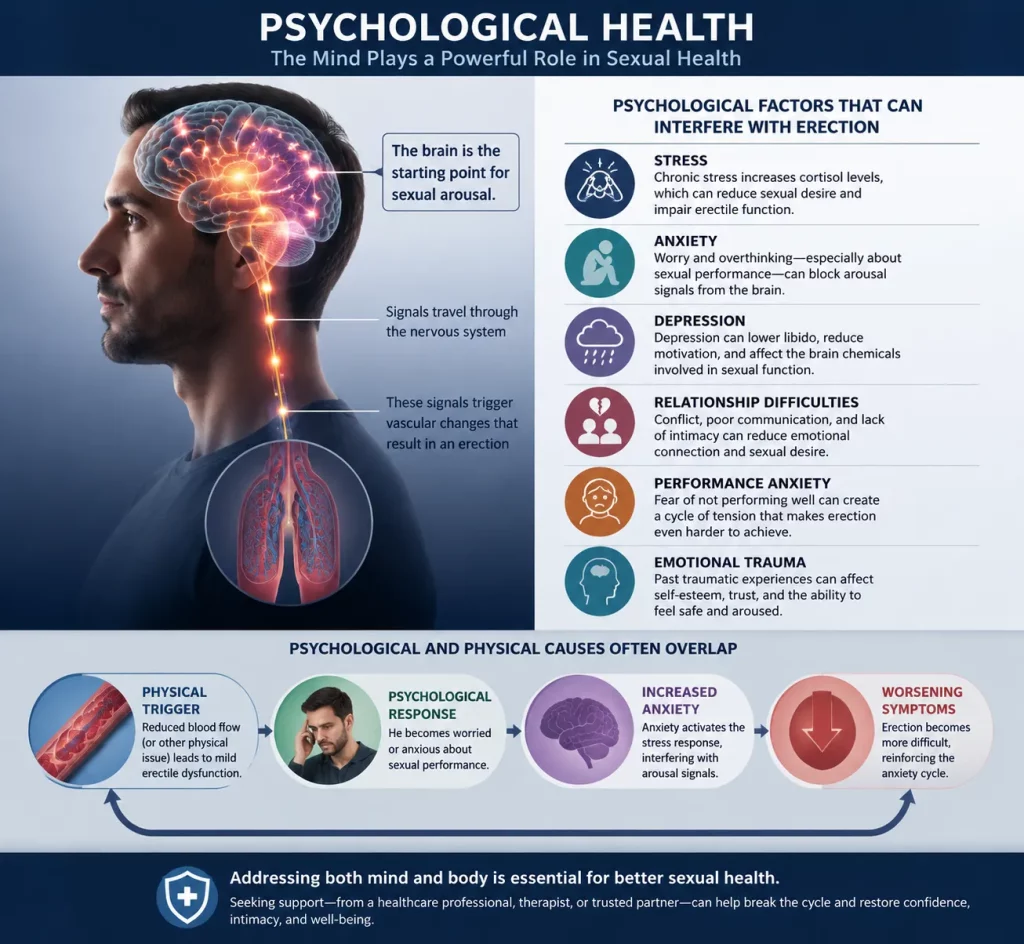
4. Psychological Health
The brain is the starting point for sexual arousal.
Stress, anxiety, depression, relationship difficulties, performance anxiety, and emotional trauma can all interfere with the neural pathways involved in erection.
Psychological and physical causes often overlap. For example, a man who initially develops mild erectile dysfunction due to reduced blood flow may later experience increased anxiety about sexual performance, further worsening the condition.
The Most Common Causes of Erectile Dysfunction
Although hundreds of medical conditions can contribute to ED, most cases fall into several major categories.
Vasculogenic Erectile Dysfunction
This is the most common form of erectile dysfunction.
It results from reduced blood flow caused by vascular disease and accounts for a significant proportion of ED cases, particularly in middle-aged and older men.
Common contributing factors include:
- Atherosclerosis
- Hypertension
- High cholesterol
- Diabetes
- Smoking
- Obesity
Neurogenic Erectile Dysfunction
Damage to the nervous system prevents normal communication between the brain and the penis.
Examples include:
- Spinal cord injury
- Stroke
- Parkinson’s disease
- Multiple sclerosis
- Peripheral neuropathy
Hormonal Erectile Dysfunction
Although less common, hormonal disorders may contribute to erectile problems.
Examples include:
- Low testosterone
- Pituitary disorders
- Thyroid disease
- Elevated prolactin
Psychogenic Erectile Dysfunction
In younger men, psychological factors may be the primary cause.
Common triggers include:
- Performance anxiety
- Depression
- Chronic stress
- Relationship conflict
- Anxiety disorders
Unlike vascular ED, psychogenic ED often develops suddenly and may vary depending on the situation or partner.
Medication-Induced Erectile Dysfunction
Certain medications can interfere with erectile function as an unintended side effect.
Examples include some:
- Antidepressants
- Blood pressure medications
- Anti-anxiety medications
- Antipsychotics
- Hormonal therapies
Patients should never stop prescribed medication without consulting their healthcare provider.
Key Takeaway
A healthy erection depends on the coordinated function of the brain, nerves, blood vessels, hormones, and penile tissue. Erectile dysfunction develops when one or more of these systems are disrupted, with vascular disease remaining the most common underlying cause in middle-aged and older men.
Understanding the root cause of ED is essential because no single treatment is appropriate for every patient. A thorough medical evaluation can help identify contributing factors and guide the selection of the most suitable treatment strategy based on the individual’s health status and underlying condition.